700 kilometres across one of the poorest countries on earth
700 km
Distance
38,612 ft
Elevation gain
7
Riding days
34°C
Peak temp
£6,837
Raised, with Gift Aid
Distance and climbing are the advertised route. One day offered a longer optional stage, which I did not take, so my own recording comes to a little under this — every day of it is below.
The ride is done — and thanks to you, it has raised £6,837 including Gift Aid. You can still give to Great Lakes Outreach directly, below. And the whole ride is now written up as an illustrated book: The Hills of Burundi.
100% of donations go to Great Lakes Outreach (UK charity 1097267). My flights, visa and in-country costs are covered privately.
Seven riding days · 100 km a day · a 2,000-metre climb on day one · no bike shops, no hot water, no day off
The ride
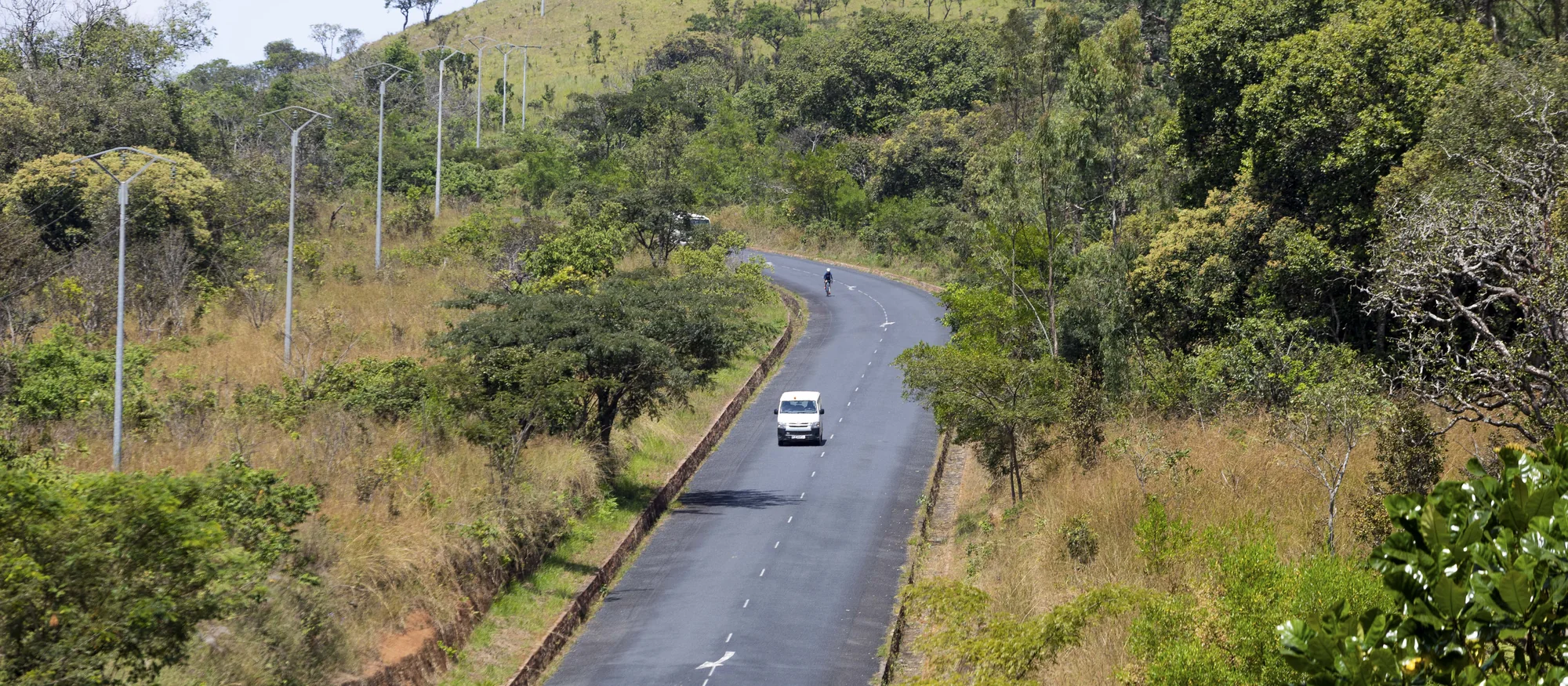
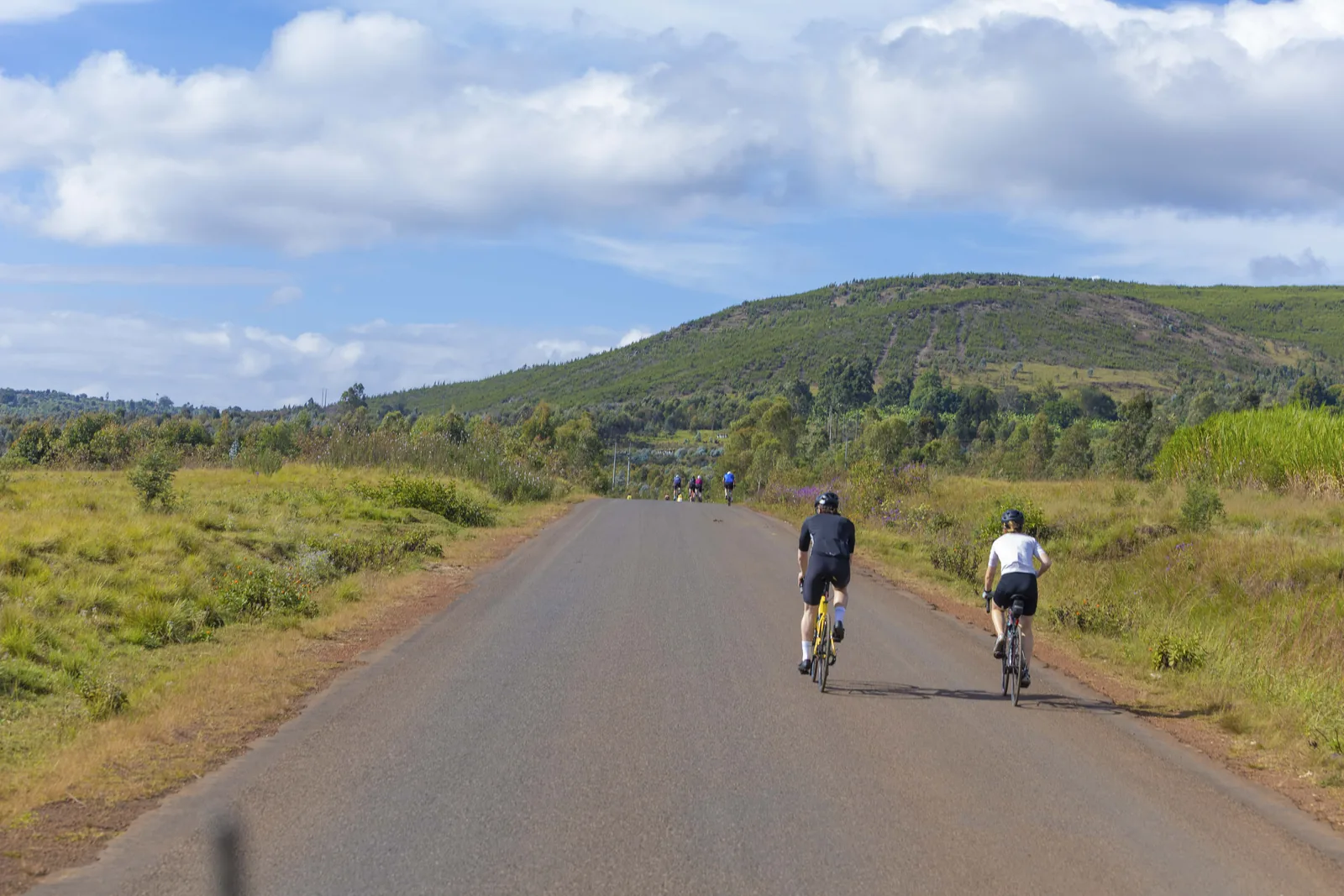
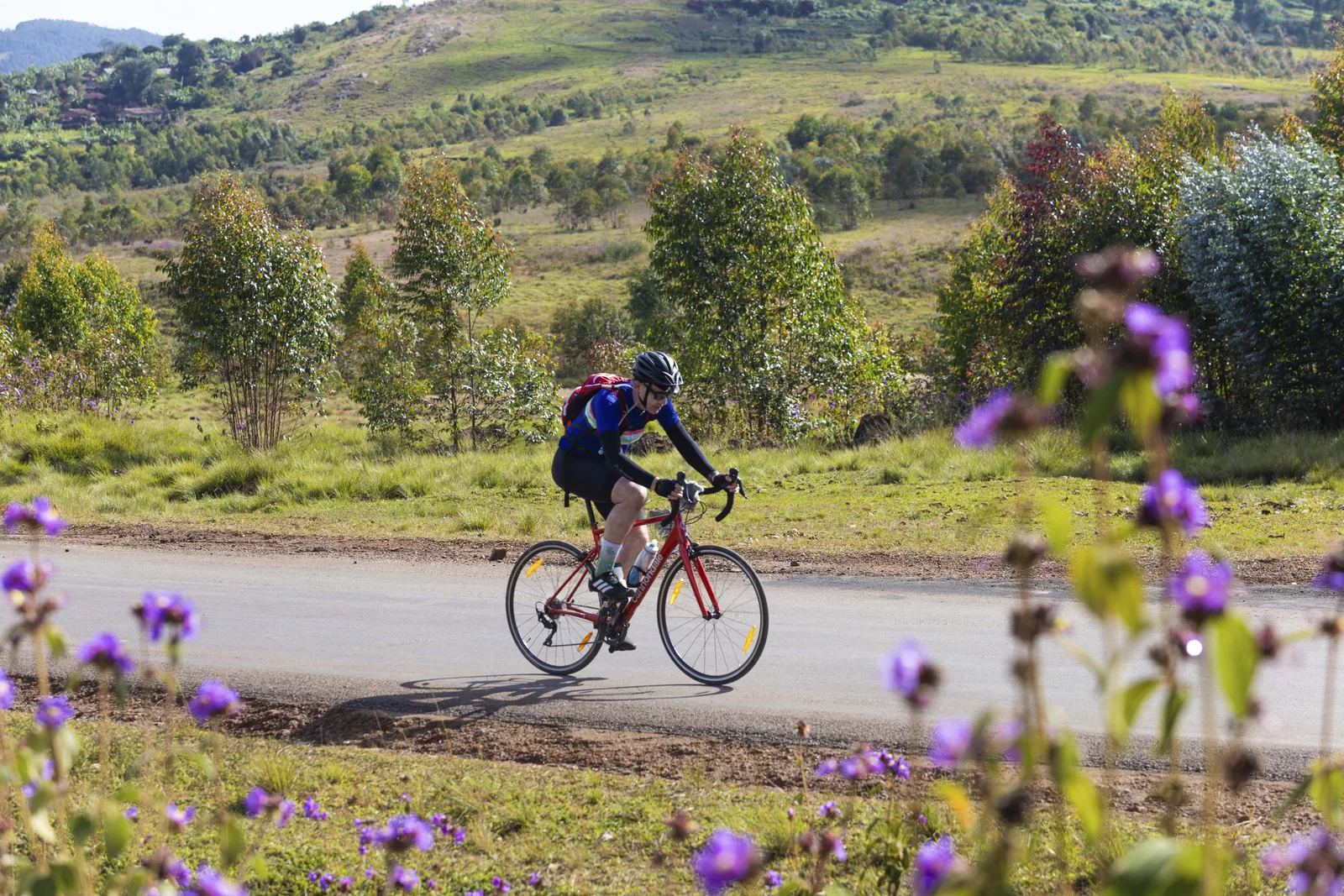
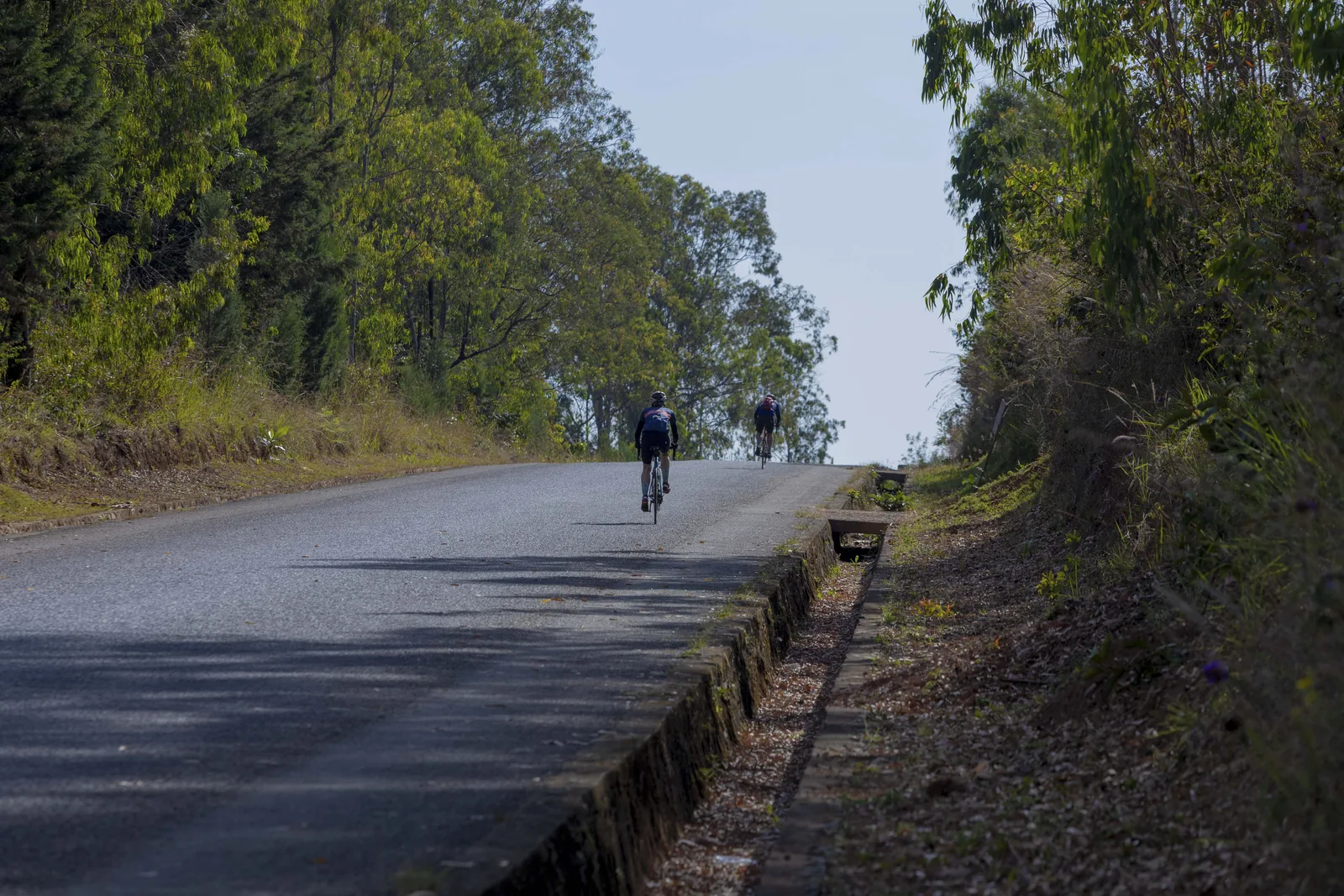
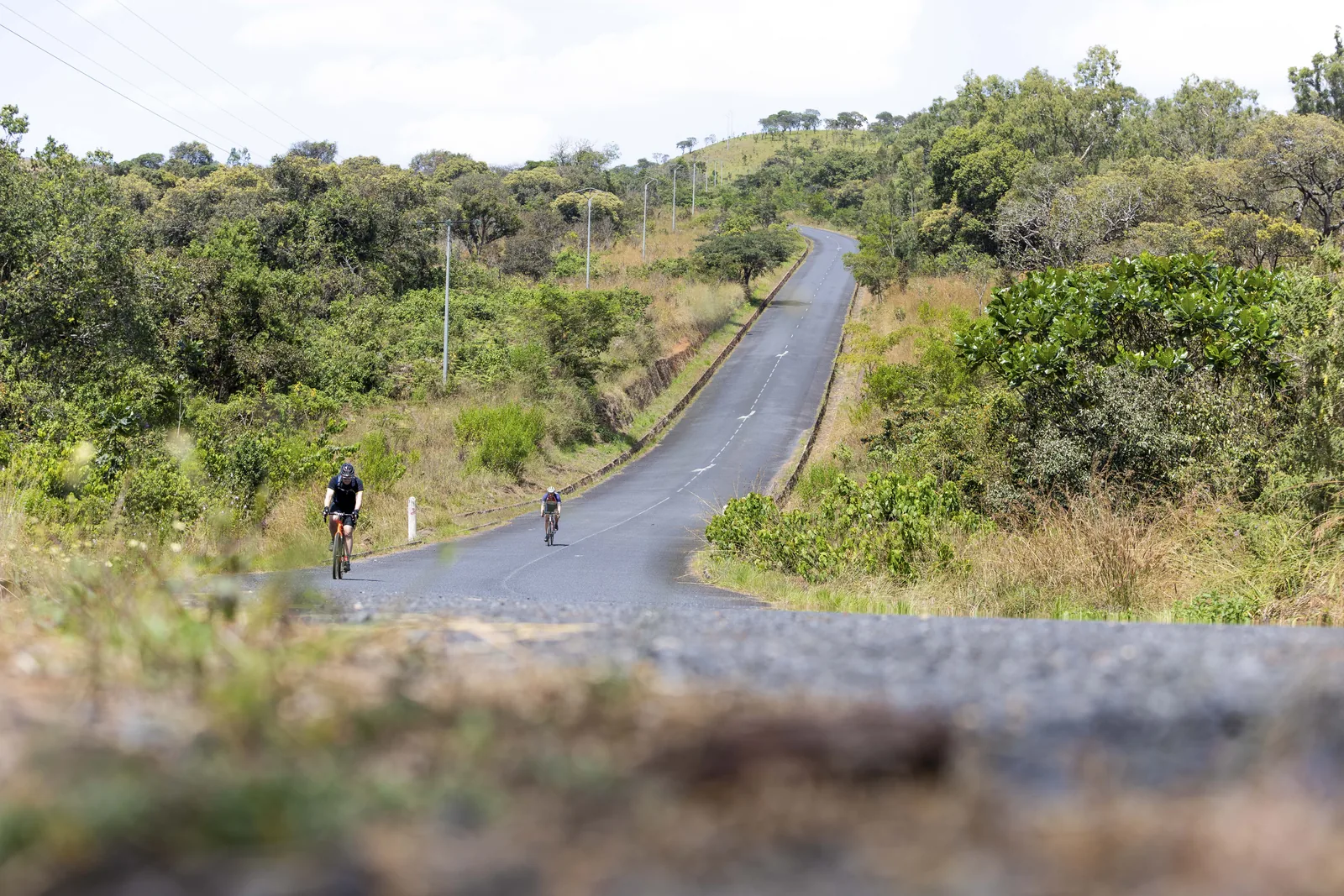
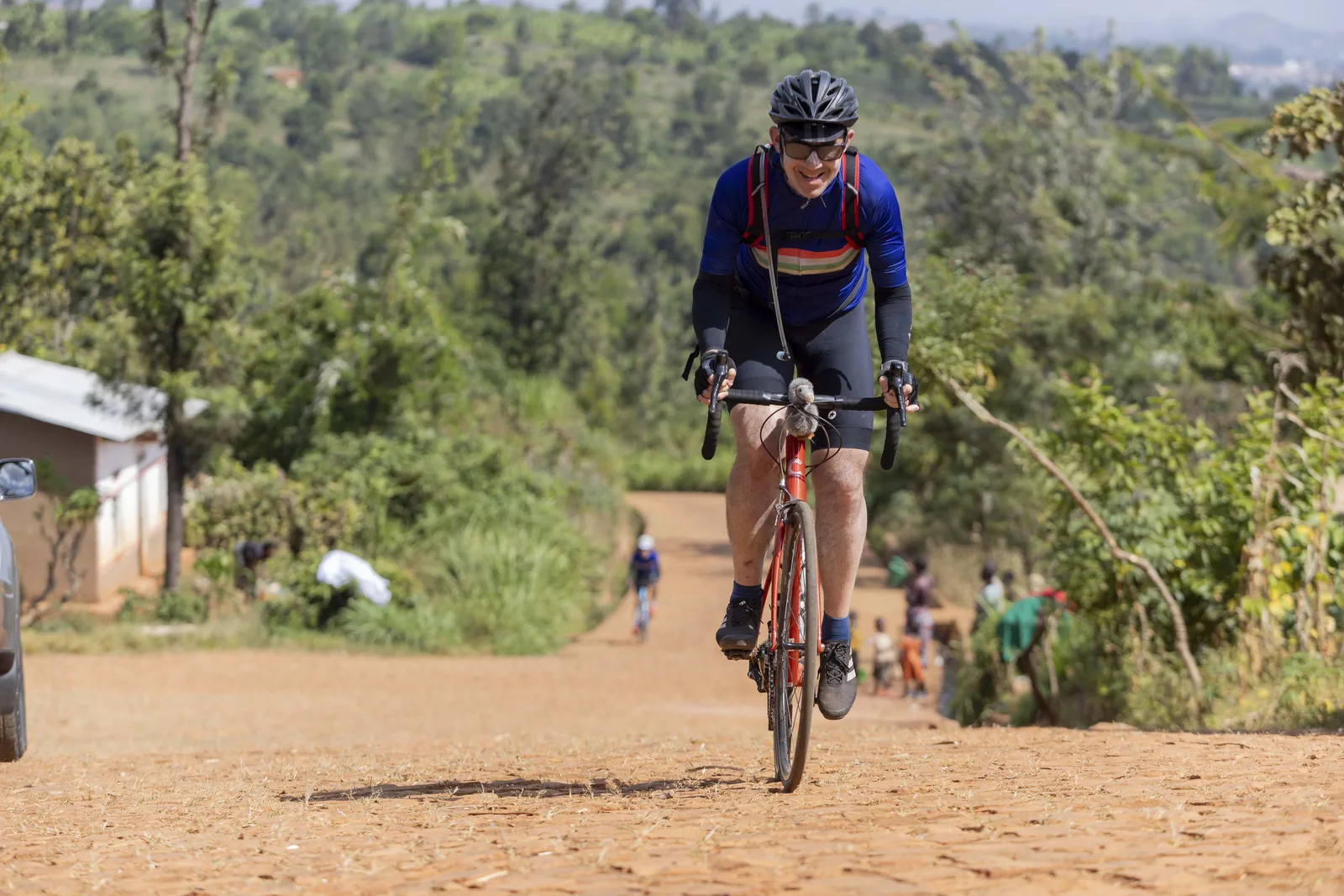
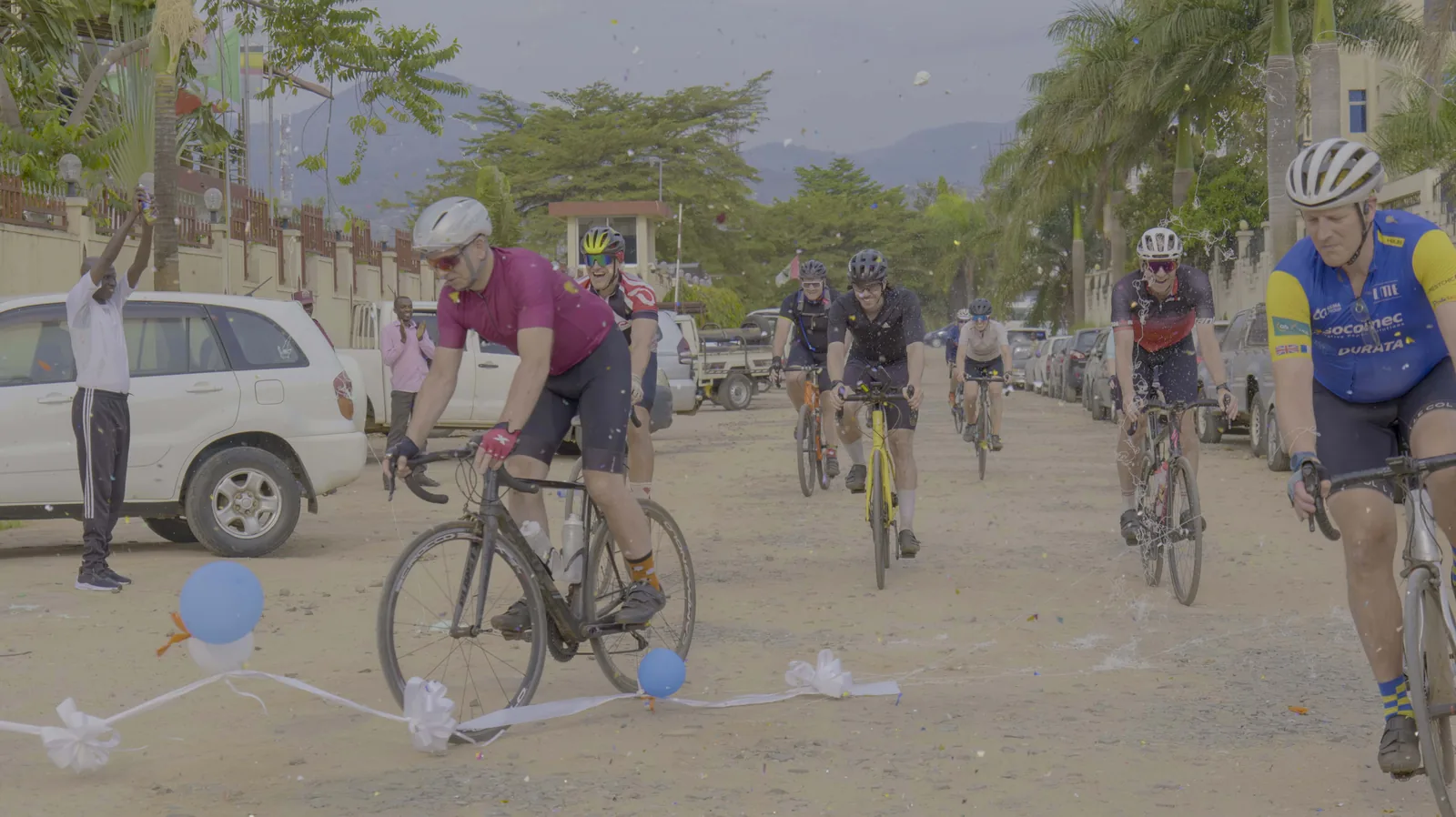
Seven riding days, in a country the size of Belgium folded into a thousand green ridges. We started in Bujumbura on the shore of Lake Tanganyika — the former capital, still the biggest city, sitting just above 800 metres — and climbed two thousand metres into the hills before lunch on day one.
From there we crossed the central plateau north-east through Matana and Rutovu, where a German explorer named Burkhart Waldecker built a stone pyramid in 1938 marking what some still call the southernmost source of the Nile. We rode through a national park on day four (and saw, for the record, not one buffalo — there are too many people and too little room left here for big game), crossed the coffee-growing highlands around Ngozi on day six, and ended that day in Gitega — the country’s new capital, and the home of the Royal Drummers.
The last day was ninety kilometres back down to Bujumbura, dropping close to a kilometre of altitude over the final thirty into the lake — the most exhilarating hour of the whole week.
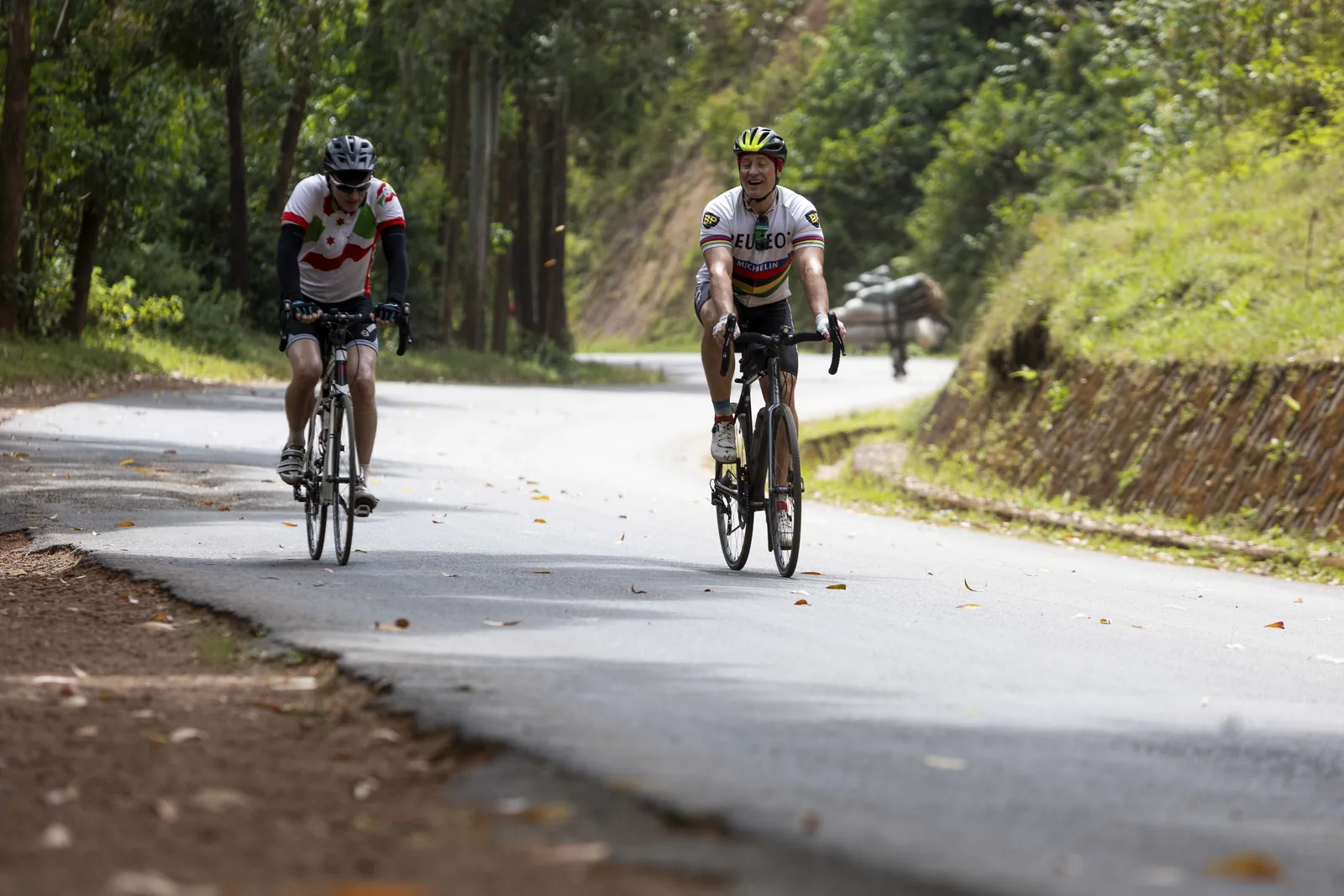
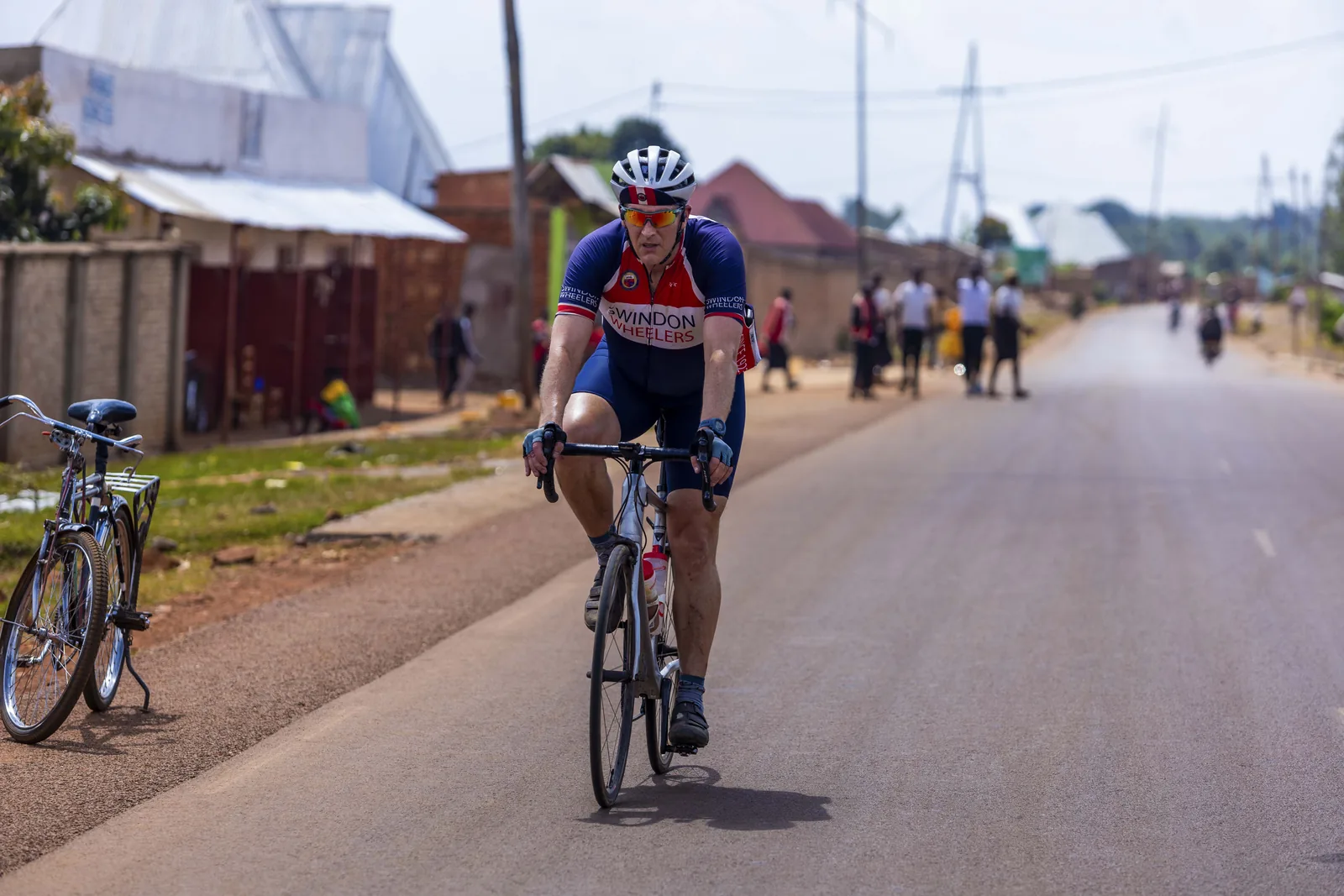
Seven-hundred kilometres. Thirty-eight thousand feet of climbing. Temperatures up to thirty-four degrees. By some distance the biggest physical thing I have ever taken on. I spent the spring doing fifty- and sixty-mile Cotswold rides as build-up, with new clipless pedals and a new cassette and a growing suspicion — entirely correct, as it turned out — that those hills were child’s play next to the ones waiting in central Africa.
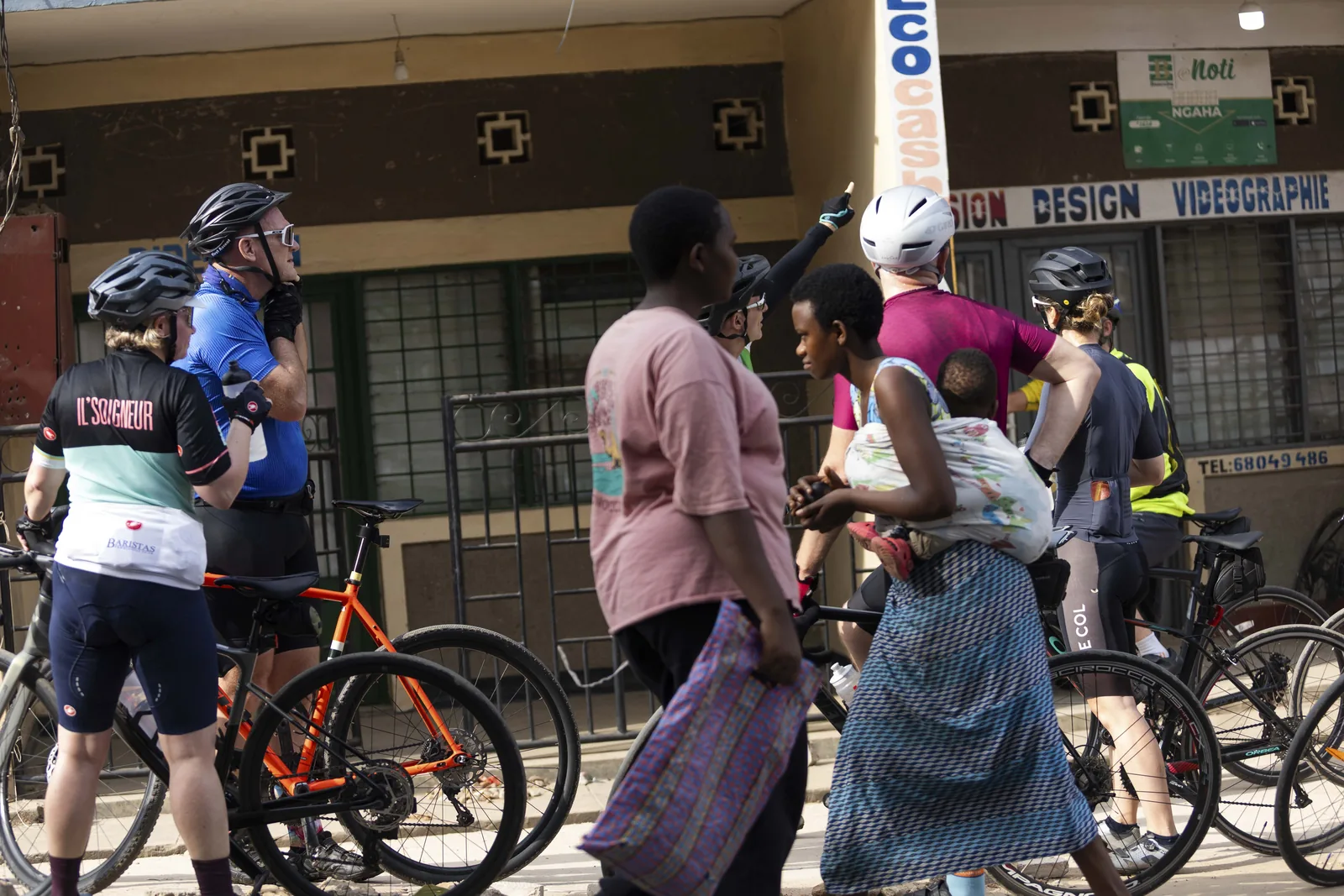
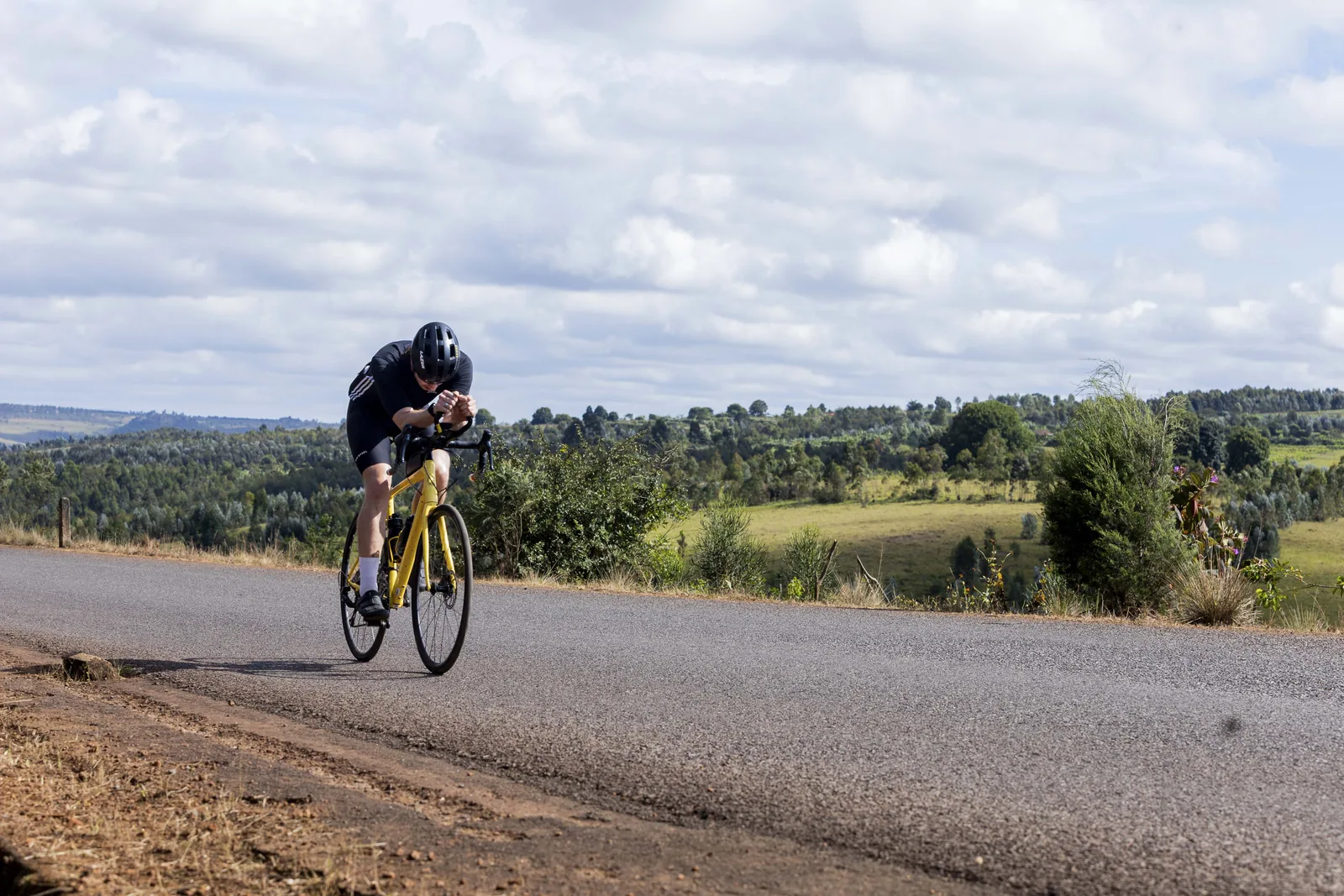
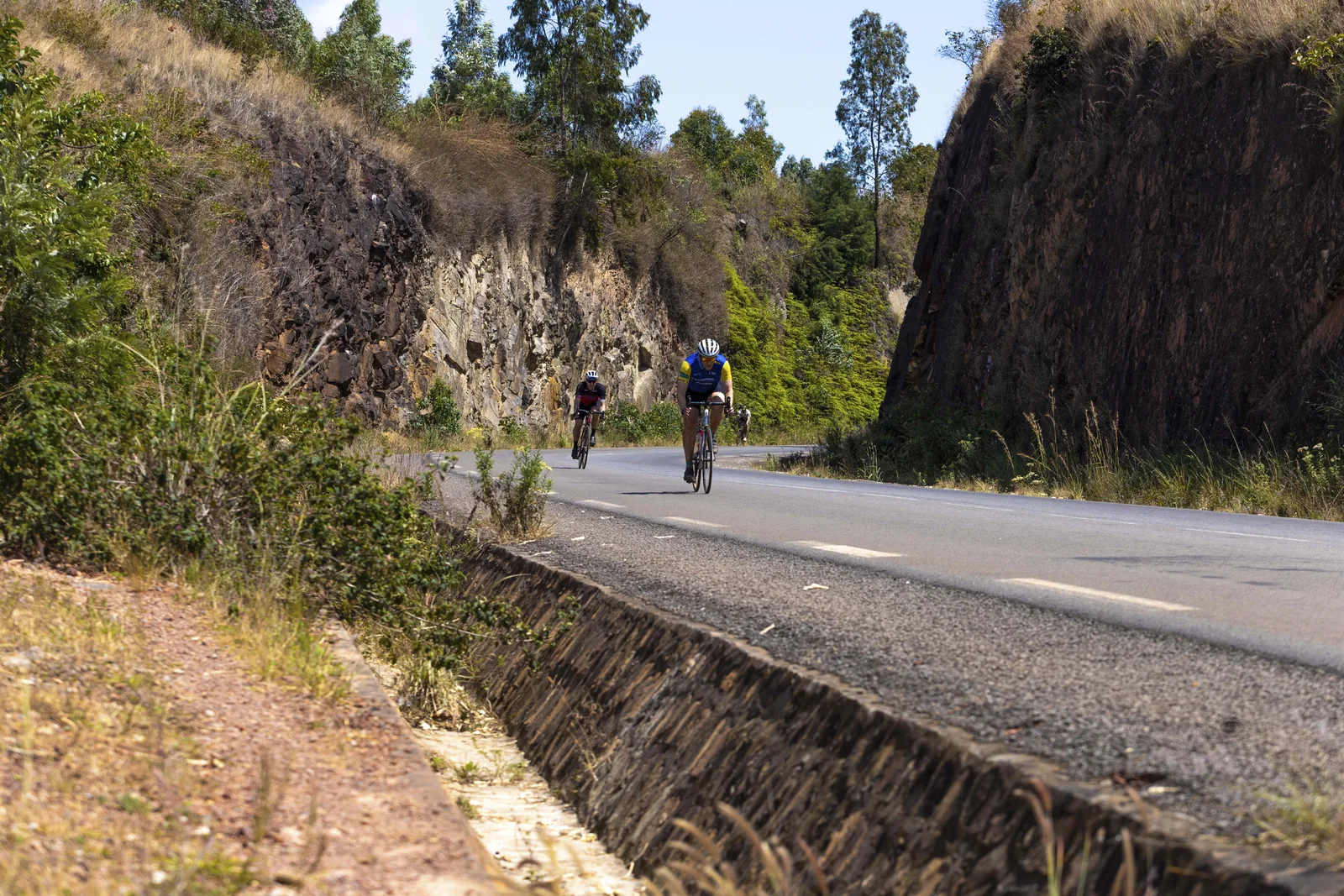
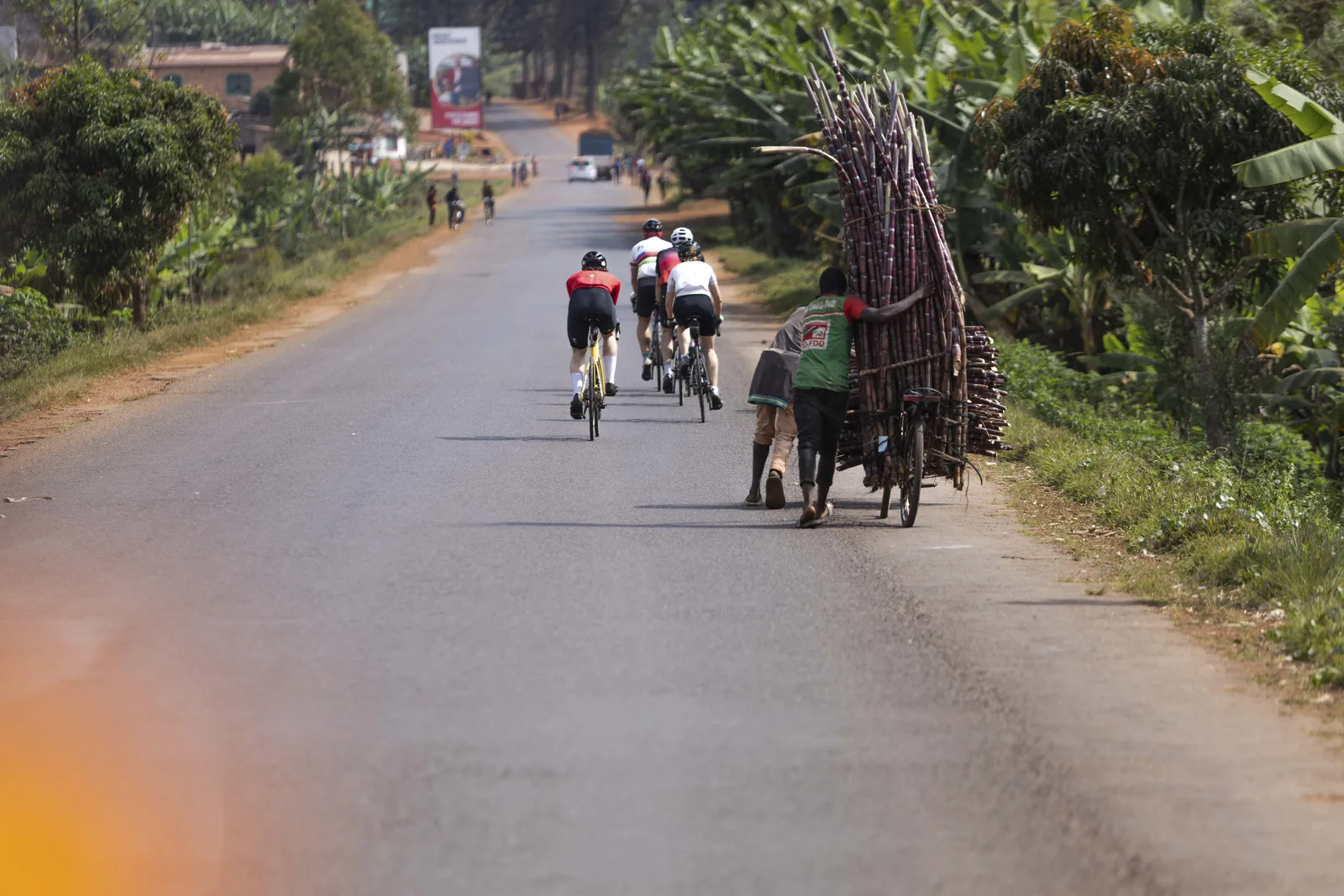
Burundi has no bike shops. If something broke on the road, whatever you could fix with the multi-tool in your jersey pocket was what you had. The roads are potholed tarmac that fades to unmade gravel; the sun was strong, the altitude high, and the only steady source of water the support truck. It was not a leisure tour — it was a serious undertaking, and the team ran it as one.
The seven days
Every day as my own GPS recorded it — 603 km and 8,997 m of climbing. Each one opens its own page, with the profile, the moments and the weather on the day.
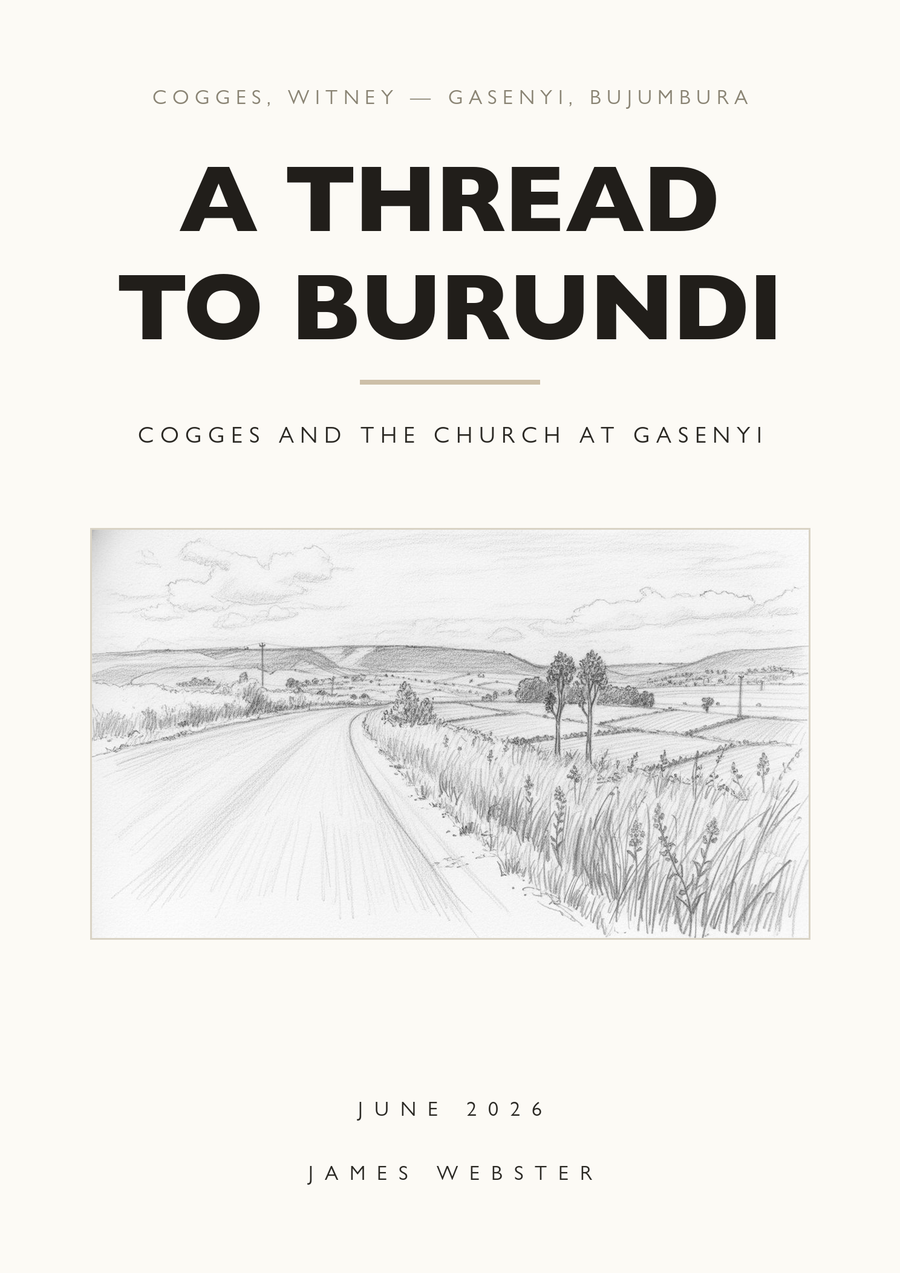
My home church in Witney — St Mary’s Cogges — has had a link with Burundi for about twenty-five years. The specific parish it partners with, Gasenyi, sits in the hills above Bujumbura, and on day one of the ride I climbed straight up into those hills. That is the personal half of the answer to why Burundi. The broader half is shorter, and colder.
Burundi is one of the poorest countries in the world. GDP per capita is around £400 a year — about a pound a day. Roughly eighty per cent of the population lives below the poverty line. Most people in Britain could not find it on a map, and could not name three facts about it.
The country has had a hard century. A selective genocide in 1972, remembered in Kirundi as the ikiza, killed somewhere between a hundred and three hundred thousand educated Hutu over the space of a few months — and the world’s response was near-total silence. A twelve-year civil war from 1993 to 2005 killed three hundred thousand more. A political crisis in 2015 sent four hundred thousand people across the borders into refugee camps. The country has been through far worse than any foreigner on a bike can imagine, and when you arrive, the first thing you notice is that people are still standing, still singing, still planting. The second thing you notice is how thin on the ground the outside world is.
The ride raises money for Great Lakes Outreach, a UK-registered charity (no. 1097267) founded by Simon Guillebaud. Simon moved to Burundi in 1999 — the middle of the civil war, when the international press was calling it the most dangerous country on earth — because he felt called. He is still there, twenty-seven years on. GLO is the network of partnerships he and a Burundian team have built around themselves in that time.
GLO does not run schools or hospitals itself. What it does is identify Burundians of unusual integrity and ability who are already running things on the ground, and back them — with funding, with networks, with the kind of moral support that comes from not being alone. Four of its partner organisations are named on the Bike for Burundi materials, but the money the riders raise is shared across the wider network.
What that means in practice is that a relatively small amount of money, given to the right people in the right place, goes a remarkably long way. In a country where the average person lives on about a pound a day, that is not a figure of speech.
◊
Where it goes
Four Burundian-led partner organisations, each addressing a different piece of the country’s specific shape of need.
Restoration Burundi works with refugees who have returned home after years or decades in the camps in Tanzania. It exists because the question of how a country reabsorbs hundreds of thousands of its own people, after a generation of exile, is not a question that solves itself.
Together for Development runs training and economic-empowerment programmes for vulnerable members of rural communities. It exists because eighty per cent of the country lives below the poverty line and the structural causes of that poverty have to be addressed at the level of individual households and individual skills.
Together for Development is also the Burundian partner of the UK-based Dorcas Dress Project, which runs sewing hubs teaching women to make and sell a cleverly-designed dress that needs neither zips nor complex machinery to produce. I’m flying home with a suitcase full of the finished dresses to save the project on return postage. If you’d like to buy one, you can.
ICJ works with orphans, widows, and the Batwa — Burundi’s indigenous hunter-gatherer minority, still among the poorest and most marginalised people in the country. It exists because each of these groups is invisible by default.
RAJEDES runs microloan and entrepreneurship training programmes for young people, who in Burundi are most of the population and most of the unemployed. It exists because the median Burundian is about seventeen years old and has to invent a future from almost nothing.
A small amount of money, given to the right people in the right place, goes a remarkably long way.
One name
Emelyne is thirty-four. She has three children. Her husband left, and she ended up in the Buterere slum on the outskirts of Bujumbura, scavenging plastic at the city dumpsites with her baby strapped to her back and her eight-year-old son alongside her. It was, she said, one of the most dangerous jobs she could think of.
She joined a local self-help savings group — ten women, meeting weekly, pooling what little they had and learning the basics of small-business finance from a GLO-supported training programme. A capital injection of the equivalent of twenty-five pounds, paid into the group fund, was enough for Emelyne to buy one goat and expand her vegetable stall at the roadside. The goat had four kids. She now has five goats, her children are in school, and she is saving towards the million Burundian francs — roughly three hundred pounds — that will let her buy a small plot of land and build a house.
That is what £25 does, with the right people in the right place. It is one of hundreds of stories like it. The full story is on the GLO site.
I have a particular soft spot for this sort of work because I am, on a different scale, its beneficiary. I started my own business — sheepCRM — in 2010 with a start-up loan from family and friends: a small amount at a decisive moment, enough for me to leave salaried work and give the thing eighteen months to fly. Fifteen years later, it is still running. The sums in Burundi are different and the stakes are different, but the mechanism is the same: a little money in the right hands at the right moment is often the whole difference between a livelihood and no livelihood. Of everything GLO funds, this is the part I care about most.
◊
The ask
The ride is finished, and thanks to people like you it has raised £6,837 for Great Lakes Outreach including Gift Aid, and it is still climbing. If you’ve read this far and would like to add to it, you can give to Great Lakes Outreach directly below, and any amount helps. Twenty-five pounds is a goat. A hundred pounds is a family set up for the year.
Every pound you give goes to the charity. I paid for the flights, the visa, and the in-country costs myself, so nothing you donate subsidised my trip.
If you can’t give, forward the link to one person who might want to. A shared page raises, on average, around five times what an unshared one does — and the single biggest thing anyone reading this can do, short of donating, is pass it on.
Thank you — truly. It turned out to be the adventure of a lifetime, and the generosity that surrounded it, from people here and people there, is the thing I’ll remember longest.