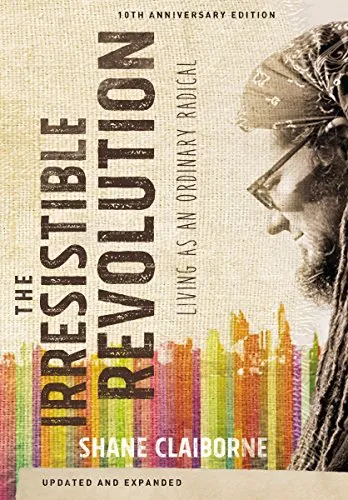
The Irresistible Revolution
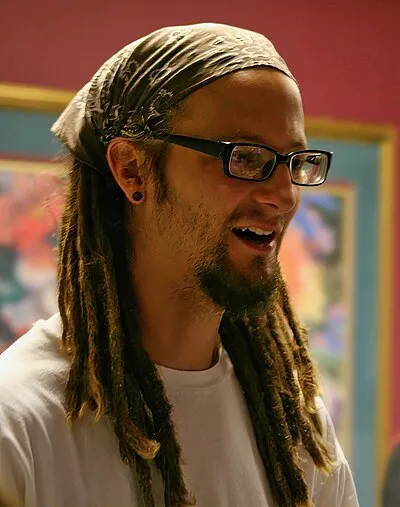
The author recounts his journey of living among the poor and advocates for a radical Christian lifestyle focused on social justice.
As I read Scriptures about how the last will be first, I started wondering why I was working so hard to be first. I heard a preacher put it like this: "If you find yourself climbing the ladder of success, be careful or else on your way up you might pass Jesus on his way down."
Wesley's general philosophy on money was, "Get it out of your hands as quick as you can, lest it make its way into your heart
one of them says he has a question for God. He wants to ask why God allows all of this poverty and war and suffering to exist in the world. And his friend says, "Well, why don't you ask?" The fellow shakes his head and says he is scared.
When his friend asks why, he mutters, "I'm scared God will ask me the same question." Over and over, when I ask God why all of these injustices are allowed to exist in the world, I can feel the Spirit whisper to me, "You tell me why we allow this to happen. You are my body, my hands, my feet."
God doesn't want to change the world without us. There are times when we throw our hands up at God and say, "Do something!" and if we listen closely, we can hear God respond, "I did do something. I made you." Sometimes we are waiting on God, and God is waiting on us. When it comes to combatting injustice, this has proved to be true: God wants our help. Certainly God can work miracles without us. It's not that God needs us but that God wants us, and that is pretty spectacular. So next time you ask God to move a mountain, don't be surprised if God hands you a shovel.
If you ask most people what Christians believe, they can tell you, "Christians believe that Jesus is God's Son and that Jesus rose from the dead." But if you ask the average person how Christians live, they are struck silent. We have not shown the world another way of doing life. Christians pretty much live like everybody else; they just sprinkle a little Jesus in along the way. And doctrine is not very attractive, even if it's true. Few people are interested in a religion that has nothing to say to the world and offers them only life after death, when what people are really wondering is whether there is life before death.
For Jesus did not seek out the rich and powerful in order to trickle down his kingdom. Rather, he joined those at the bottom, the outcasts and undesirables, and everyone was attracted to his love for people on the margins. (We know that we all are poor and lonely anyway, don't we?) Then he invited everyone into a journey of downward mobility to become the least
Frederick Buechner said, "The place God calls you to is the place where your deep gladness and the world's deep hunger meet.
We live in an age in which people, when they hear the word Christian, are much more likely to think of people who hate gays than people who love outcasts, and that is a dangerous thing.
For those of you thinking about college, consider this: don't just ask how strong the academics are or how good the football team is or even how you like the campus or the town. All of those are good questions, but make sure you also ask, "What do you pay your housekeeping staff?" One of the true tests of a good college is how they treat their workers, and certainly a decent indicator of that is how the lowest paid workers fare in contrast to the highest paid administrators
I did a ton of research on tithes and offerings in Scripture, and discovered they are unmistakably intended to be used for redistributing resources to the poor and not to go toward buildings and staff for the church.
One of the underlying assumptions is that money from the offering or tithe belongs to the church. But the Scriptures consistently teach that the offering is God's instrument of redistribution and that it belongs to the poor. Giving to the poor should not make its way into the budget; it is the budget. One could argue that small portions of the Israelite offering (no more than 10 percent) were given to the Levitical priesthood (Neh. 12:47), and that in the early church an even smaller contribution could be given to the church's itinerant evangelists, who, incidentally, were themselves poor (1 Cor. 4:11). But it is not a coincidence that the first major organizational structure in the early church was created to assure order in the redistribution of resources to widows and orphans (Acts 6:1-6).
perhaps we should relate to the church as a dysfunctional parent. We honor, submit to, and love her. But we do not allow her to destroy those we love with her dysfunction
Sometimes folks ask this question about giving to beggars and panhandlers with suspicion, speculating that homeless folks will just use their money for drugs or alcohol, which happens sometimes. But we don't always ask what CEOs are doing with our money when we give it to their companies, and they may be buying drugs or pornography (or yachts) with our money!